Standard vs. Custom Enclosures: When Should You Invest in a Custom Solution?
In the world of industrial equipment and IT infrastructure, the enclosure is often treated as an afterthought. Many engineers and procurement managers default to picking a standard "off-the-shelf" cabinet because it’s fast, readily available, and seemingly cost-effective.
But here’s the hard truth: a standard enclosure is a compromise.
While standard models work perfectly for generic applications, forcing your specialized hardware into a one-size-fits-all box can lead to overheating, poor cable management, wasted space, and even costly system failures. So, when does it make financial and operational sense to break away from the standard and invest in a custom solution? Let’s dive in.
📦 The Reality of Standard Enclosures
Standard enclosures (like typical 19-inch racks or standard junction boxes) are designed to meet the needs of the broadest possible audience. They follow strict industry dimensions (such as 1U, 2U, 4U heights) and come with pre-set mounting patterns.
The Pros:
The Cons:
🛠️ What Does a Custom Enclosure Solution Offer?
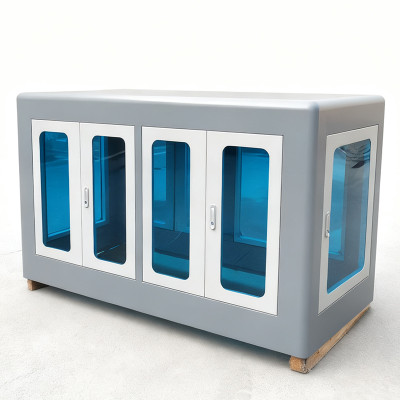
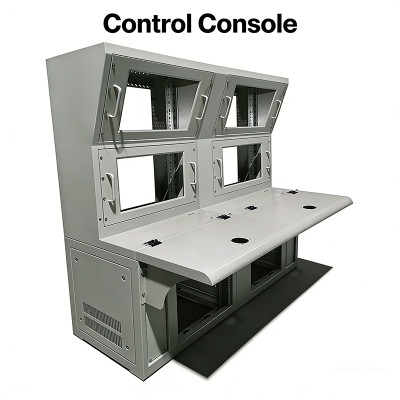
Custom enclosure manufacturing isn’t just about changing the color or adding a logo. It is about engineering the chassis around your specific application. Whether it’s a specialized server chassis, a rugged outdoor telecom cabinet, or a PLC control box, customization tailors every millimeter of the enclosure to your needs.
Key areas of customization include:
💡 4 Signs It’s Time to Switch to Custom
How do you know if you’ve outgrown standard enclosures? If you encounter any of the following scenarios, it’s time to talk to a manufacturer about customization:
1. Your Hardware Has Unique Dimensions
If your PCBs, battery packs, or industrial controllers don’t fit standard 19-inch racks, or if they are too deep/shallow for off-the-shelf boxes, you are wasting valuable time with adapters. A custom chassis eliminates "dead space" and ensures a snug, vibration-resistant fit.
If your PCBs, battery packs, or industrial controllers don’t fit standard 19-inch racks, or if they are too deep/shallow for off-the-shelf boxes, you are wasting valuable time with adapters. A custom chassis eliminates "dead space" and ensures a snug, vibration-resistant fit.
2. Thermal Management is a Struggle
Are your fans running at max speed constantly? Standard cabinets often have generic ventilation. A custom solution can integrate optimized wind tunnels, specific mesh patterns, and dedicated heat-sink mounting points to lower your internal operating temperature by several degrees, significantly extending hardware lifespan.
Are your fans running at max speed constantly? Standard cabinets often have generic ventilation. A custom solution can integrate optimized wind tunnels, specific mesh patterns, and dedicated heat-sink mounting points to lower your internal operating temperature by several degrees, significantly extending hardware lifespan.
3. Assembly and Maintenance Take Too Long
If your technicians are spending hours drilling holes, filing down sharp edges, or rearranging messy cables inside a standard box, you are losing money on labor. A custom enclosure comes pre-prepared with precise cutouts, dedicated cable management routes, and easy-access panels, drastically reducing assembly and maintenance time.
If your technicians are spending hours drilling holes, filing down sharp edges, or rearranging messy cables inside a standard box, you are losing money on labor. A custom enclosure comes pre-prepared with precise cutouts, dedicated cable management routes, and easy-access panels, drastically reducing assembly and maintenance time.
4. You Are Deploying at Scale
This is the most common misconception: "Custom is too expensive." While a single custom unit has a higher initial cost (due to design and tooling), the story changes at scale. When you factor in the Total Cost of Ownership (TCO), custom enclosures often become cheaper for medium-to-large batches. You save on assembly labor, reduce the risk of field failures, and eliminate the cost of buying redundant "filler" panels or external cooling adapters.
This is the most common misconception: "Custom is too expensive." While a single custom unit has a higher initial cost (due to design and tooling), the story changes at scale. When you factor in the Total Cost of Ownership (TCO), custom enclosures often become cheaper for medium-to-large batches. You save on assembly labor, reduce the risk of field failures, and eliminate the cost of buying redundant "filler" panels or external cooling adapters.
⚖️ The Verdict: Making the Right Investment
Choosing between standard and custom isn't a binary decision—it’s a calculation of value.
At the end of the day, your enclosure is the first line of defense for your valuable electronics. Don't let a generic box compromise your product's performance.
Ready to optimize your enclosure strategy?
Whether you need a slight modification to a standard model or a fully bespoke industrial chassis, our engineering team is ready to help you find the most cost-effective solution. [Contact us today] to discuss your project requirements
Whether you need a slight modification to a standard model or a fully bespoke industrial chassis, our engineering team is ready to help you find the most cost-effective solution. [Contact us today] to discuss your project requirements