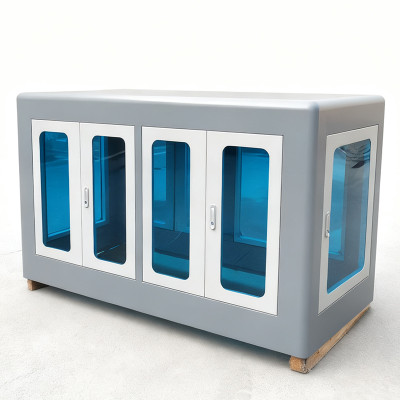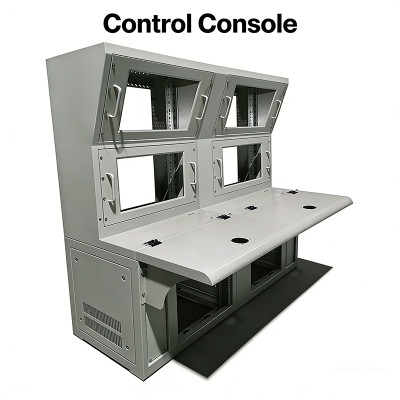
How to Select the Best Manufacturing Partner for Your Metal Cabinet Fabrication
In the rush to bring a project to life, we sometimes overlook the critical role of choosing the right manufacturing partner for our metal cabinet fabrication projects. This decision goes far beyond a simple line-item cost. Finding a fabrication partner isn't just about securing the lowest bid; it's about embedding quality, efficiency, and long-term reliability into the very core of your product. A strategic partnership with the right Custom metal cabinet fabrication manufacturer ensures your needs for metal cabinet fabrication are met with success, safeguarding your project from hidden costs and unforeseen complications.
Key Takeaways
- Total Cost vs. Initial Quote: The cheapest initial offer often hides significant long-term expenses, including rework, project delays, and safety issues. True cost evaluation encompasses the entire lifecycle of the product, not just the upfront price.
- Certifications as a Quality Benchmark: Certifications like ASME and ISO 9001 are not just formalities; they are crucial indicators of a manufacturer's commitment to quality, safety, and regulatory compliance. They provide assurance that fabrication processes adhere to globally recognized standards.
- The Expertise of Integrated Services: A partner offering end-to-end solutions—from design and welding to finishing and assembly—streamlines the production process. This integration minimizes communication errors, reduces lead times, and ensures a single point of accountability.
- Proximity's Strategic Value: Choosing a local or domestic partner significantly cuts down on logistical complexities. It leads to faster turnaround times, lower shipping costs, and better collaboration, enhancing overall project agility and responsiveness.
The True Cost of Partner Selection for Your Metal Cabinet Fabrication
When sourcing a manufacturing partner, the initial quote is merely the tip of the iceberg. A decision based solely on the lowest price can expose a project to substantial risks and unforeseen expenditures that dwarf any initial savings. True cost of ownership includes not just the purchase price but also the long-term operational and maintenance expenses. A comprehensive evaluation reveals that a higher-quality, certified partner often delivers a lower total cost over the project's lifecycle.

Beyond the Initial Quote: Why Cheap Can Be Costly
Opting for a low-cost fabrication partner can seem like a fiscally responsible decision, but it frequently leads to a cascade of expensive problems. The allure of a low bid can blind companies to the potential for poor quality, which manifests in various costly ways.
We must remember that the real cost isn't just the quote, but also the consequences of poor choices, such as failed inspections, missing documentation, or rework.
The selection of a manufacturing partner based only on cost can result in significant negative consequences. Lower-priced manufacturers may cut corners on quality control, leading to products that fail to meet industry standards or your own specifications. This can result in failed inspections, which bring projects to a halt and can incur penalties. Furthermore, incomplete or inaccurate documentation—a common issue with subpar suppliers—can cause significant delays in compliance and commissioning processes. Rework is another major hidden cost; parts that are fabricated incorrectly must be fixed or remade, consuming valuable time and resources that negate any upfront savings.
Choosing a low-cost fabrication partner can lead to equipment underperforming, unexpected downtime, and critical safety issues, all of which add to the actual cost of our metal cabinet fabrication project.
Equipment that underperforms is a direct drain on profitability. For metal cabinets, this could mean doors that don't align, locks that fail, or a finish that quickly degrades. Unexpected downtime caused by equipment or component failure can stop an entire production line, leading to massive losses in productivity. More importantly, poorly fabricated components can pose serious safety risks. A cabinet housing critical electronics that fails could lead to equipment damage or, in the worst-case scenario, personnel injury. These potential liabilities transform a "cheap" cabinet into an incredibly expensive problem.
The Value of Certifications and Compliance in Metal Cabinet Fabrication
Industry certifications are a formal validation of a manufacturer's capabilities, quality control systems, and commitment to safety. For customers, these certifications reduce risk and provide a reliable benchmark for evaluating potential partners.
When we work with an ASME certified company, we ensure adherence to the highest industry standards, preventing costly errors and guaranteeing quality.
The American Society of Mechanical Engineers (ASME) provides one of the most recognized industrial standards globally. Working with an ASME-certified fabricator ensures that your project is handled with a disciplined approach to engineering, manufacturing, and quality control. This certification is not just a label; it is tied to a formal program that governs design, fabrication, inspection, and testing. This adherence to stringent requirements minimizes the risk of fabrication errors, ensures structural integrity, and results in equipment built to last. ASME certification fundamentally reduces compliance and inspection risks, as the entire process is built around a documented and audited quality control system.
This kind of certification provides us with assurance that our metal cabinet fabrication will meet rigorous performance and safety requirements.
Certifications like ASME and ISO 9001 provide peace of mind that a fabrication partner is dedicated to upholding the highest standards. ISO 9001 certification demonstrates that a manufacturer has a robust quality management system (QMS) focused on consistency and customer satisfaction. It ensures that processes are well-defined, repeatable, and designed to minimize defects. For a metal cabinet, this translates to consistent dimensional accuracy, weld quality, and finish. When a partner holds these certifications, you are not just buying a product; you are investing in a process that has been independently verified to deliver quality, reliability, and safety.
Unlocking Efficiency and Quality through Expert Metal Cabinet Fabrication
Achieving a superior final product depends heavily on the technical expertise and process maturity of your fabrication partner. From the precision of a single weld to the seamless integration of multiple production stages, an expert fabricator transforms raw materials into high-quality metal cabinets by mastering both the art and science of their craft.
The Science and Art of Welding for Optimal Metal Cabinet Fabrication
Welding is a complex discipline where scientific principles and hands-on skill converge. The quality of a weld directly impacts the structural integrity, longevity, and aesthetics of a metal cabinet.
We understand that welding is both an art and a science; knowing its nuances, like how metal changes shape and moves when heated, is incredibly important.
The intense heat of welding causes metal to expand and contract, a process that can lead to shrinkage and distortion if not properly managed. An experienced welder understands how these thermal forces will affect the material and can anticipate its behavior. This knowledge is crucial for maintaining the precise geometry required for metal cabinets, where doors must fit perfectly and panels must align without gaps. Understanding the metallurgy of different materials and how they react to heat is a science, while applying that knowledge to produce a clean, strong weld is an art.
Experienced welders can predict and counteract deformation, ensuring the precision required for our metal cabinet fabrication.
Expert fabricators employ various techniques to control distortion. This can include using specific weld sequences, such as welding from the center outwards or alternating welds on opposite sides of a joint to balance the shrinkage forces. They may also use rigid clamps, jigs, and fixtures to hold components firmly in place during welding and cooling. By presetting parts at a slight angle, welders can even use the expected shrinkage to pull the assembly into perfect alignment. This proactive approach to managing deformation is a key differentiator between a standard fabricator and a true expert.
Through smart design, unnecessary welds can be removed, saving us both time and money in the metal cabinet fabrication process.
A key principle of Design for Manufacturability (DFM) is to optimize the design for easier and more efficient production. In the context of welding, this often means minimizing the number and length of welds required. An expert fabrication partner will collaborate with you to identify opportunities where a bent flange could replace a corner weld or where a single, stronger weld can do the job of multiple smaller ones. Reducing weld-count not only speeds up production but also lowers labor costs, consumes less material, and reduces the overall heat input, further minimizing the risk of distortion.
Integrating Processes and Minimizing Downtime in Metal Cabinet Fabrication
Efficiency in manufacturing is not just about how fast one task is completed, but how smoothly the entire production workflow operates. A partner that offers integrated services and prioritizes uptime can deliver higher quality products faster.
An ideal partner integrates welding with other necessary fabrication processes, such as machining and painting, providing us with a smooth, comprehensive service.
A one-stop-shop or vertically integrated manufacturer offers significant advantages by handling all stages of production under one roof. When processes like laser cutting, forming, welding, machining, powder coating, and assembly are managed by a single entity, the entire workflow is streamlined. This eliminates the logistical hurdles, costs, and potential for damage associated with transporting semi-finished parts between multiple vendors. A single point of contact simplifies communication, ensures accountability, and allows for real-time adjustments, leading to a more efficient and error-free process.
By minimizing equipment downtime through good maintenance and smart material choices—like using the right wire packaging—we can improve the speed and quality of our metal cabinet fabrication.
Unplanned downtime is a major productivity killer in any manufacturing environment. Reliable partners mitigate this risk through rigorous preventative maintenance schedules for their equipment, from robotic welders to paint lines. They also make smart choices in consumables to ensure consistent performance. For instance, in welding, using large bulk wire drums instead of smaller spools minimizes the frequency of changeovers, while ensuring proper wire feeding mechanisms prevents tangles and stoppages. These seemingly small operational details add up to significant gains in arc-on time, which directly translates to higher throughput and faster project completion.
The Role of Advanced Welding Techniques and Post-Weld Services in Metal Cabinet Fabrication
Modern technology has revolutionized welding, offering greater control and higher quality than ever before. A top-tier fabrication partner leverages these advancements and complements them with thorough post-weld services to deliver a flawless final product.
Using modern technologies like pulse welding can help us control heat, reduce distortion, and ultimately boost the quality of our fabricated components.
Pulse MIG welding is a significant advancement over traditional welding methods. This technique uses a pulsed current that cycles between a high peak and a low background level, which allows the welder to precisely control heat input. This is especially beneficial when fabricating metal cabinets from thin materials like sheet steel or aluminum, as it dramatically reduces the risk of warping and burn-through. The result is a stronger, cleaner weld with minimal spatter, which reduces post-weld cleanup time and improves the overall aesthetic of the cabinet.
Reliable partners offer complete services after welding, including inspections and finishing, to make sure our metal cabinet fabrication looks great and performs perfectly.
The fabrication process doesn't end when the welding torch is turned off. A comprehensive partner provides essential post-weld services to ensure the final product meets all specifications. This includes non-destructive testing (NDT) and visual inspections to verify the integrity of every weld. It is also followed by finishing processes such as grinding, sanding, and surface preparation to create a smooth, clean base for painting or powder coating. This attention to detail ensures not only the structural soundness of the metal cabinet but also a professional, high-quality appearance that reflects well on your brand.
The Strategic Advantage of Proximity and Comprehensive Capabilities for Metal Cabinet Fabrication
In today's volatile global market, the geographic location of your manufacturing partner and the breadth of their capabilities are no longer just logistical details—they are critical strategic advantages. Choosing a partner who is close by and offers a full range of services can significantly enhance efficiency, reduce risk, and improve your project's bottom line.
Why Local Matters: Faster Lead Times and Lower Logistics for Metal Cabinet Fabrication
The decision to partner with a local or domestic manufacturer offers tangible benefits that directly impact project timelines and costs. Proximity shortens the supply chain, making it more resilient and responsive.
When we choose a supplier who is geographically close to us, it greatly affects the speed, quality, and overall success of our metal cabinet fabrication projects.
Partnering with a local fabricator transforms the dynamic of your supply chain. It eliminates the time zone differences and language barriers that can complicate communication and lead to costly misunderstandings. The ability to conduct on-site visits, "kick the tires," and have face-to-face meetings fosters a deeper level of collaboration and allows for swift resolution of any issues that may arise. This improved communication and granular control over quality assurance are invaluable in ensuring the final product meets your exact specifications.
Local partners mean quicker delivery, lower shipping costs, and fewer delays related to transportation or customs, which is especially helpful when we have tight deadlines.
One of the most significant advantages of a domestic partner is the drastic reduction in lead times. Instead of waiting weeks for ocean freight and navigating unpredictable customs delays, products are transported via regional logistics, often arriving in days. This speed allows for greater market responsiveness and the ability to operate with a Just-in-Time (JIT) inventory model, which reduces warehousing costs. Furthermore, local sourcing minimizes shipping expenses, which can be substantial for large, heavy items like metal cabinets. By avoiding international transit risks, you create a more stable and predictable production schedule, which is crucial for meeting tight deadlines.
Beyond Basic Fabrication: A Complete Solution for Metal Cabinet Fabrication
The most valuable partners are those who can provide more than just one piece of the puzzle. A manufacturer offering a true end-to-end solution acts as an extension of your own team, managing the entire production lifecycle from start to finish.
The best manufacturing partners offer full, end-to-end solutions, starting from getting materials to complex assemblies and thorough testing.
A turnkey or single-source manufacturer provides a vertically integrated approach, handling every step from raw material procurement and fabrication to final assembly, finishing, and quality testing. This contrasts sharply with a fragmented approach where you might have to coordinate with separate vendors for laser cutting, bending, welding, and powder coating. A partner with comprehensive capabilities can manage the entire bill of materials, ensuring all components are sourced and fulfilled in a timely manner.
This complete approach ensures that our metal cabinet fabrication benefits from integrated services and a single point of contact, making our project management easier.
Integrated fabrication consolidates all aspects of production under one roof, creating a seamless and efficient workflow. This single-point-of-contact model streamlines communication, eliminates the blame game between different vendors, and ensures everyone is aligned on the project specifications. When designers, engineers, and production teams collaborate closely within the same facility, information flows freely, reducing the risk of errors and expediting decision-making. This cohesion not only saves time and reduces administrative burden but also leads to higher consistency and quality in the final product.
Rigorous Product Development and Customer-Centric Metal Cabinet Fabrication
A premier manufacturing partner does more than just follow a print; they actively engage in the product development process to optimize for quality, cost, and functionality. Their focus is on building a partnership that provides value far beyond the components they produce.
We should look for partners who use strict new product development processes and use technical centers to check products and processes carefully.
Top-tier manufacturers operate with a structured New Product Introduction (NPI) process. This disciplined framework ensures that every new project moves from concept to full-scale production in a controlled and validated manner. It involves creating prototypes, testing materials, and refining fabrication processes to iron out any issues before a single production part is made. Partners with dedicated technical or R&D centers can perform rigorous validation, ensuring that the final cabinet will stand up to its intended use and environment.
A partner that focuses on our needs will actively work with us, offering design for manufacturability (DFM) solutions to help us achieve the lowest total cost for our metal cabinet fabrication.
A truly customer-centric partner becomes a collaborative ally, not just a supplier. They will apply Design for Manufacturability (DFM) principles to your project, analyzing your design and suggesting modifications that can improve quality, simplify assembly, or reduce cost without sacrificing functionality. For example, they might recommend a change in material thickness, a different type of hardware, or a modification to a bend radius to make the part easier to produce. This collaborative expertise is aimed at optimizing the "total cost of ownership," ensuring you get the best possible value over the long term.
Conclusion
The success of your metal cabinet fabrication project hinges on more than just materials and specifications; it is fundamentally determined by the partner you choose. By moving beyond a narrow focus on the initial price and instead evaluating a manufacturing partner on their technical expertise, quality certifications, capacity for integrated services, and strategic proximity, you can secure a far more valuable outcome.
Investing the time to carefully select the right partner is a direct investment in the quality, efficiency, and long-term success of your products. A strong partnership provides not only superior metal cabinets but also a resilient supply chain, reduced total costs, and the innovative collaboration needed to thrive in a competitive marketplace.
Frequently Asked Questions
Q1: What is the primary risk of choosing a fabrication partner based only on the lowest price?
A: The main risk is incurring significant hidden costs that outweigh initial savings. These can include expenses from rework, production delays due to failed inspections, equipment downtime, and potential safety liabilities from poor quality components.
Q2: Why are certifications like ASME and ISO 9001 important for metal cabinet fabrication?
A: These certifications serve as independent verification of a manufacturer's commitment to quality and safety. ASME ensures adherence to rigorous engineering and fabrication standards, while ISO 9001 confirms a robust quality management system is in place to deliver consistent products and meet customer requirements.
Q3: What advantages does a "one-stop shop" or integrated fabricator offer?
A: An integrated fabricator handles all production stages (e.g., cutting, welding, finishing, assembly) in-house. This streamlines the entire process, reduces lead times, cuts logistical costs, simplifies communication with a single point of contact, and ensures consistent quality control throughout the project.
Q4: How does partnering with a local manufacturer benefit my project's timeline?
A: Local partners dramatically reduce lead times by eliminating long-distance shipping and customs delays. Their proximity allows for quicker deliveries, more responsive communication for faster problem-solving, and greater flexibility to accommodate changes, all of which help keep your project on schedule.