How to Design Cost-Effective Custom Sheet Metal Enclosures
Are you planning a custom sheet metal enclosure project and looking for effective ways to manage the budget? Designing custom sheet metal enclosures efficiently isn't just about cutting corners; it's about making intelligent choices from the initial concept all the way through to final production. This guide will explore practical, in-depth strategies to help you achieve a high-quality, cost-effective custom sheet metal enclosure that meets your specifications without breaking the bank.
We'll delve into smart design principles, economical material and finish selections, streamlined manufacturing processes, and the power of effective collaboration. By the end, you'll be equipped with the knowledge to create a successful, budget-friendly enclosure for your next project.
Key Takeaways
- Design for Manufacturing (DFM): Applying DFM principles is the cornerstone of cost reduction. This involves simplifying geometry, reducing part counts, and designing for standard tooling to minimize setup times and labor costs.
- Material and Finish Selection: Opting for cost-effective, in-stock materials like 5052 aluminum or cold-rolled steel can significantly lower expenses. Similarly, choosing durable and efficient finishes like powder coating over wet paint reduces both cost and environmental impact.
- Process Optimization: Understanding the trade-offs between fabrication methods is crucial. Favoring fasteners over labor-intensive welding and choosing sheet metal fabrication for simpler parts over CNC machining can lead to substantial savings.
- Strategic Collaboration: Partnering with an experienced Original Equipment Manufacturer (OEM) and maintaining clear communication provides access to expertise, economies of scale, and optimized designs, preventing costly errors and rework.
Smart Design Strategies for Your Custom Sheet Metal Enclosure
The most significant opportunities for cost savings in a custom sheet metal enclosure project are often found in the initial design phase. A well-thought-out design that prioritizes manufacturability can drastically reduce labor time, material waste, and the need for complex, expensive operations.
Apply Design for Manufacturing (DFM) Principles
Design for Manufacturing (DFM) is a proactive engineering approach that focuses on designing products to be as easy and economical to manufacture as possible. For sheet metal enclosures, DFM is about innovating through simplification. It involves a holistic review of the design to identify and eliminate unnecessary complexity, which in turn reduces costs and accelerates production timelines. Most fabrication errors and cost overruns stem from designs that overlook the realities of the manufacturing process, such as improper bend specifications or cutout placements.
DFM simplifies designs, reduces costs, and speeds production. Optimizing your custom sheet metal enclosure design for efficient, low-cost fabrication is key.
A core tenet of DFM is to create a design that can be produced repeatedly and reliably at the lowest possible cost while still meeting all functional and aesthetic requirements. This means engaging with manufacturing experts early to analyze the CAD model for potential producibility issues before any metal is cut. By addressing details like bend radii, material thickness, and hardware integration at the design stage, you can prevent costly rework and delays. A successful DFM strategy streamlines production, allowing manufacturers to scale up with minimal challenges. Key areas of focus include simplifying the enclosure's geometry, standardizing features, and being mindful of how choices impact downstream processes like assembly and finishing.
Simplify Enclosure Geometry
The complexity of an enclosure's geometry has a direct and significant impact on its final cost. Every bend, hole, and feature requires a specific manufacturing step, consuming time and resources. Simplifying the overall shape and features is a foundational strategy for cost reduction.
Reduce unnecessary cutouts; extensive laser cutting adds cost. Use long slots or perforated metal instead of many small vents. Combine multiple small parts into one to lower assembly costs.
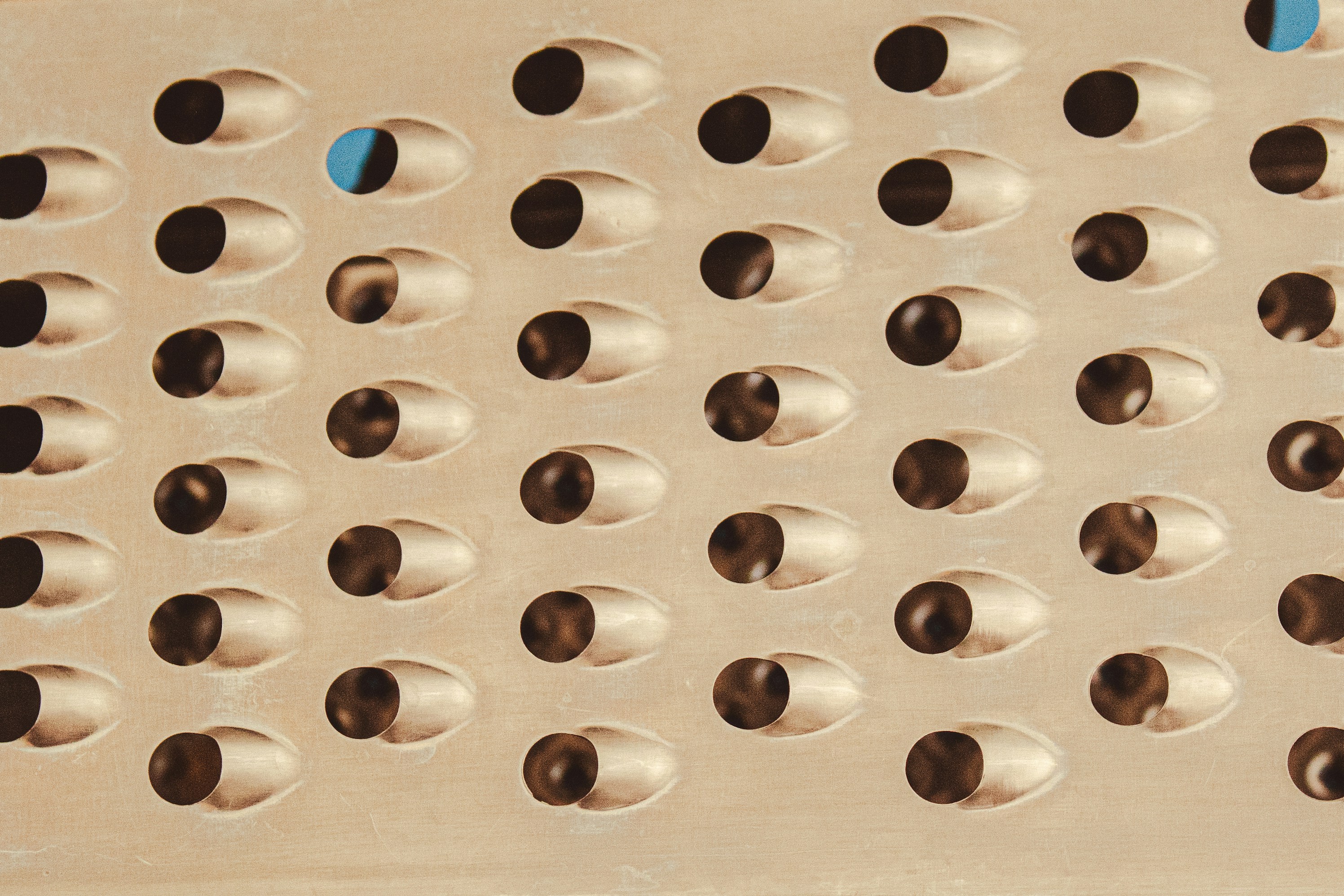
Extensive and intricate cutouts, particularly dense vent patterns with many small holes, can dramatically increase production costs because they require significant time under the laser cutter. A more cost-effective approach is to substitute these patterns with longer slots or to use pre-perforated sheet metal stock if it meets your ventilation requirements. This change can prevent material warping and reduce machine time.
Another powerful simplification technique is part consolidation. Whenever possible, design single components that can be bent into shape rather than creating multiple flat parts that need to be assembled and welded later. Combining two or more pieces into a single, intelligently bent part eliminates assembly labor and hardware costs. It also often results in a stronger, more rigid final product.
When designing bends, consistency is key to reducing costs. Using the same bend radius for all folds in your design eliminates the need for additional machine setups and tooling changes. A good rule of thumb is to design the inside bend radius to be at least equal to the material's thickness (1t), as this prevents cracking and is compatible with standard tooling. Avoid designing sharp, zero-radius corners, as they are difficult to produce and can compromise the material's integrity.
Optimize Fastener and Hardware Use
Hardware and fasteners, while seeming like minor components, can collectively add significant cost and complexity to an assembly. A strategic approach to their selection and implementation is a crucial part of designing for cost-effectiveness.
Limit fastener quantity and keep thread sizes consistent. Use formed features for threads instead of separate hardware. Stick to in-stock hardware to save time and money on your custom sheet metal enclosure.
Limiting the overall quantity of hardware is a fundamental DFM principle. Each fastener adds to the part count, increases assembly time, and requires inventory management. One effective technique is to design formed features directly into the sheet metal, such as extruded holes that can be tapped for threads. This can eliminate the need for separate press-in nuts (like PEM nuts) in certain applications.
When fasteners are necessary, standardization is paramount. Use common hole sizes and consistent thread types across the entire assembly. This standardization reduces the number of unique parts that need to be stocked and minimizes tooling changes during fabrication. Self-clinching fasteners, such as PEM® nuts and studs, are excellent for thin sheet metal as they become a permanent part of the panel and provide strong, reusable threads. However, always ensure the chosen fastener material is compatible with and harder than the sheet metal to prevent installation issues.
Finally, always prioritize hardware that your manufacturer keeps in stock. Requesting special-order components introduces additional costs and can significantly extend project lead times. Collaborating with your fabricator to select from their standard, readily available hardware is one of the easiest ways to keep your project on budget and on schedule.
Choosing Economical Materials and Finishes for Custom Sheet Metal Enclosures
Beyond the initial design, your choice of materials and surface finishes represents another major factor in the overall cost of a custom sheet metal enclosure. Selecting the right combination of material and finish is a balancing act between performance requirements, aesthetic goals, and budgetary constraints.
Select Cost-Effective Materials
The material you choose dictates not only cost but also the enclosure's weight, durability, and resistance to environmental factors. While specialized alloys can offer unique properties, they often come at a premium. For most applications, standard, readily available materials provide excellent performance at a much lower price point.
Aluminum (like 5052) and cold-rolled steel are often budget-friendly. Specialty materials or stainless steel increase costs. Opt for materials your manufacturer already stocks.
Cold-Rolled Steel (CRS) is a strong, durable, and highly cost-effective material, making it an excellent choice for indoor applications like industrial control panels and server racks. While steel is generally cheaper per pound than aluminum, it is also nearly three times denser, which can increase shipping and handling costs. Bare CRS will rust if exposed to moisture, so it must be protected with a finish like powder coating.
Aluminum, particularly grades like 5052-H32, is another budget-friendly option and an industry standard for custom enclosures. It is lightweight, naturally corrosion-resistant, and easy to machine. While aluminum's raw material cost per pound is higher than steel's, its low density means you get more material volume for the same weight, which can offset the initial price difference. Its excellent thermal conductivity also makes it a great choice for enclosures housing heat-generating electronics.
Stainless Steel offers superior strength and corrosion resistance, making it essential for harsh environments, such as marine applications or medical devices. However, this high performance comes with a significantly higher price tag compared to CRS and aluminum. It should be specified only when its specific properties are a strict requirement.
To ensure cost efficiency, always prioritize materials and standard thicknesses that your fabricator has in stock. This avoids the extra costs and long lead times associated with special orders.
| Material | Key Strengths | Best Applications | Relative Cost |
|---|---|---|---|
| Cold-Rolled Steel | High strength, durability, low material cost. | Indoor electrical panels, server racks, industrial controls. | Low |
| Aluminum (5052) | Lightweight, corrosion-resistant, good for bending. | Telecom equipment, electronics, lightweight enclosures. | Medium |
| Stainless Steel | Excellent corrosion resistance, high strength, chemical resistance. | Marine, medical, food-grade, and outdoor enclosures. | High |
Prioritize Smart Finishing Options
The finish on your enclosure does more than just determine its color; it provides crucial protection against corrosion, abrasion, and environmental wear. While various finishing options exist, some are far more cost-effective and durable than others.
Powder coating is a durable, cost-effective, and eco-friendly finish, superior to wet paint for custom sheet metal enclosures. Choose in-house finishes and minimize masking points, which are manual and add cost.
Powder coating is a dry finishing process where a colored powder is electrostatically applied to a grounded metal part and then cured in an oven. This process creates a thick, uniform, and highly durable finish that is more resistant to chipping, scratching, and fading than traditional wet paint. The application is highly efficient with minimal waste, as any overspray can be collected and reused. Furthermore, powder coating contains no solvents or volatile organic compounds (VOCs), making it an environmentally friendly choice. These efficiencies make it a very cost-effective solution for providing a robust and attractive finish.
In contrast, wet paint is less durable, can drip or run during application, and involves solvents that are harmful to the environment. For these reasons, powder coating is the superior choice for most sheet metal enclosures.
Another key cost factor in finishing is masking. Any area that must remain free of coating, such as threaded holes, grounding points, or surfaces for electrical contact, must be manually masked before finishing and unmasked afterward. This manual labor can add significant costs to your project. When designing your enclosure, try to minimize the number of masking points required to streamline the finishing process and reduce expenses.
Finally, similar to material selection, opt for finishing services that are performed in-house by your fabricator. Sending parts to a third party for specialized finishes like anodizing or plating will invariably add cost and extend the project timeline.

Streamlining Manufacturing Processes for Your Custom Sheet Metal Enclosure
Choosing the most efficient manufacturing process is as critical as the design itself. The methods used to cut, form, and assemble your enclosure directly influence production speed, precision, and, most importantly, cost. Making informed decisions about these processes can lead to significant savings.
Decide Between Sheet Metal Fabrication and CNC Machining
Two of the most common methods for creating custom enclosures are traditional sheet metal fabrication and CNC machining. While both can produce high-quality parts, they are fundamentally different processes with distinct advantages in cost, speed, and geometric capability.
Sheet metal fabrication suits moderate to large batches of simple, bent enclosures efficiently. CNC machining offers high precision for complex 3D shapes, ideal for prototypes or high-tolerance custom sheet metal enclosures. A hybrid approach blends cost and accuracy.
Sheet Metal Fabrication is a subtractive process that starts with flat sheets of metal. These sheets are cut to shape (typically with a laser), and then bent, punched, and assembled. This method is exceptionally cost-effective for parts with designs based on flat patterns and bends, like typical box-shaped enclosures. For production volumes over 50-100 units, sheet metal fabrication is almost always the cheaper option due to low material waste, fast cycle times, and modest tooling costs. The process scales smoothly from prototype to full production without requiring significant design changes.
CNC Machining, on the other hand, is a subtractive process that carves the final part from a solid block of material. This method offers unparalleled precision, making it ideal for enclosures with extremely tight tolerances, complex three-dimensional curves, integrated features like heat sinks, or thick walls. However, CNC machining generally involves longer cycle times and creates significant material waste (often 60-80% of the starting block), which drives up the per-part cost. While competitive for very low-volume prototypes (1-10 units), its cost remains high regardless of quantity.
A hybrid approach can offer the best of both worlds. This involves using sheet metal fabrication for the main body of the enclosure and then using CNC machining for specific features that require high precision, such as critical interface points or tapped holes. This blend can deliver the necessary accuracy where it counts while leveraging the cost-effectiveness of sheet metal for the overall structure.
Favor Fasteners Over Welding
The method used to join the different components of your enclosure—fasteners or welding—has a major impact on labor costs, assembly time, and even the finishing process.
Replacing welding with fasteners often reduces custom sheet metal enclosure costs. Welding is labor-intensive. If required, combine fasteners with spot welds instead of full-seam welds to save money.
Welding creates a strong, permanent bond and is essential for applications requiring a watertight or airtight seal. However, it is a manual, labor-intensive process that is both time-consuming and expensive. The intense heat generated during welding can also warp thin materials and damage surface coatings, potentially requiring costly rework.
Fasteners (bolts, screws, rivets) offer a highly cost-effective and accurate alternative for assembling enclosures. The process can be automated, which reduces labor costs and the risk of human error. Fastened assemblies are also much easier to disassemble for maintenance, repairs, or upgrades, which can lower the total lifecycle cost of the product. In many situations, a bolted joint is just as strong as a welded one.
If welding is unavoidable due to structural or sealing requirements, consider more economical welding techniques.
- Spot Welding: This method joins overlapping metal sheets at specific "spots" and is significantly faster and cheaper than continuous welding, especially for high-volume production.
- Stitch (or Intermittent) Welding: This involves creating a series of short welds with gaps in between. It is less expensive and creates less heat than a continuous seam weld, reducing the risk of material distortion.
A full-seam weld should only be specified when absolutely necessary for strength or to create a completely sealed joint, as it is the most time-consuming and expensive welding option.
Collaborating Effectively for Your Custom Sheet Metal Enclosure Project
Even the best-laid plans can fall short without strong collaboration between you and your manufacturing partner. Effective partnerships and clear, consistent communication are the final, crucial ingredients for a cost-effective and successful custom sheet metal enclosure project.
Leverage OEM Partnerships
For companies that require a steady and reliable supply of custom enclosures, forming a long-term partnership with an Original Equipment Manufacturer (OEM) fabricator offers significant strategic advantages that go beyond simple one-off transactions.
Partnering with an Original Equipment Manufacturer (OEM) provides expertise, optimized design, efficiency, and cost-effective solutions through economies of scale for your custom sheet metal enclosure.
A dedicated OEM partner invests time in understanding your products, quality standards, and operational priorities. This deep familiarity leads to several key benefits:
- Engineering Support and DFM: An experienced OEM fabricator acts as an extension of your engineering team. They can provide invaluable Design for Manufacturability (DFM) feedback early in the process, identifying opportunities for cost reduction, part consolidation, and tolerance optimization before production begins. This proactive collaboration helps prevent costly redesigns and production bottlenecks down the line.
- Process Consistency: Unlike a standard job shop that may reset its process for each order, an OEM partner documents and maintains all process references—including tooling, bend sequences, and fixture setups. This ensures that every batch of enclosures is produced with the same high level of consistency and quality.
- Economies of Scale: Long-term partnerships allow for better demand forecasting and the potential for higher-volume material purchases, which can lead to lower per-unit costs. The fabricator can manage inventory more effectively, sometimes offering just-in-time delivery that reduces your own inventory carrying costs.
- Simplified Supply Chain: Consolidating your fabrication needs with a single, multi-capability partner simplifies your supply chain significantly. It means fewer purchase orders to manage, a single point of communication, and less risk of delays that occur when moving parts between different specialized vendors.
Enhance Manufacturer Communication
Clear, detailed, and proactive communication is the bedrock of a successful manufacturing project. Ambiguities or missing information can lead to incorrect assumptions, production errors, delays, and ultimately, increased costs.
Provide detailed design requirements and use preferred file types (e.g., Solidworks, vector for graphics). Inform if it's a reorder. Consider longer lead times for 'economy' services for lower pricing on your custom sheet metal enclosure.
To ensure your vision is executed perfectly, follow these communication best practices:
- Provide Comprehensive Documentation: The foundation of clear communication is a complete and accurate set of design files. While a 2D drawing is necessary for specifying tolerances, dimensions, and other critical information, a 3D CAD model is essential for modern fabrication. Fabricators use 3D models to program CNC equipment like press brakes and to visualize the final assembly, which helps prevent misinterpretations.
- Use Universal File Formats: To avoid compatibility issues, provide your 3D models in a neutral format like STEP (.step, .stp). For 2D drawings that define flat patterns for laser cutting, the DXF (.dxf) format is the industry standard. Submitting files in these universal formats ensures your design data is translated accurately into the fabricator's CAM software.
- Flag Reorders: If you are placing a repeat order, always inform your fabricator. This allows them to pull up the established process documentation and tooling from the previous run, ensuring consistency and often speeding up production.
- Be Open to Feedback: Your fabricator is an expert in their field. Be receptive to their suggestions for design modifications. Their feedback is aimed at improving manufacturability and reducing your costs.
- Leverage Lead Time for Savings: Manufacturing lead time is the total time from order to delivery. If your project timeline is flexible, ask your supplier if they offer "economy" pricing for longer lead times. This allows them to fit your job into their production schedule more efficiently, which can translate into significant cost savings for you.
Frequently Asked Questions (FAQ)
1. What is the single biggest factor that drives up the cost of a custom sheet metal enclosure? Complexity is the single biggest cost driver. This includes complex geometries, a high number of parts requiring extensive welding, tight tolerances on non-critical features, and numerous small cutouts. Each of these elements adds labor, machine time, and potential for error, all of which increase the final price. Simplifying the design through DFM principles is the most effective way to manage costs.
2. How much can I really save by applying Design for Manufacturing (DFM)? The savings can be substantial, often ranging from 15% to 30% or more on the final part cost. By optimizing a design for manufacturability before production starts, you eliminate costly rework, reduce material waste, shorten cycle times, and minimize labor-intensive secondary operations like welding and manual finishing.
3. What is the best and most cost-effective material for an outdoor enclosure? For outdoor applications, corrosion resistance is critical. While stainless steel offers the best protection, it is also the most expensive. A more cost-effective solution is often aluminum (like grade 5052), which has excellent natural corrosion resistance. Another option is galvanized steel, which is coated in zinc for protection. In all cases, applying a durable powder coat finish will provide an essential extra layer of protection against moisture and UV exposure.
4. When should I choose CNC machining over sheet metal fabrication for an enclosure? You should choose CNC machining when your enclosure requires features that sheet metal fabrication cannot easily produce. This includes very thick walls (over 6-10mm), complex 3D contours, integrated solid features like heat sinks, or parts demanding extremely tight tolerances (e.g., tighter than +/- 0.1mm). For prototypes and very low volumes, CNC machining can also be a viable option, but it becomes significantly more expensive than sheet metal as quantities increase.
5. Why are STEP and DXF the preferred file formats? STEP (.stp) is a universal 3D CAD format that preserves the solid geometry of a part, allowing fabricators to use it with any programming software without compatibility issues. DXF (.dxf) is the industry-standard 2D format used to create the flat patterns needed for laser cutting and punching machines. Providing both file types—a 3D STEP model for the overall assembly and bending, and a 2D DXF file for the flat pattern—ensures the manufacturer has all the clear, accurate data needed for a smooth production run.
Conclusion
Designing a cost-effective custom sheet metal enclosure is entirely achievable with careful planning and a series of smart, strategic choices. The journey from concept to a finished product involves more than just the physical build; it's a process of optimization at every stage.
By embracing and implementing the principles of Design for Manufacturing (DFM), you lay the most important groundwork for an economical project. Simplifying your design, standardizing components, and being mindful of the manufacturing processes are the most powerful levers you can pull to control costs. Coupling this with the savvy selection of economical materials like cold-rolled steel or aluminum and durable finishes like powder coating further enhances savings without sacrificing quality. Finally, streamlining production by favoring efficient processes like fastening over welding and fostering a collaborative, communicative partnership with your manufacturer will help you navigate the complexities of fabrication and avoid expensive pitfalls.
We hope these in-depth tips and strategies empower you to approach your next project with confidence. By focusing on these key areas, you can successfully develop high-quality, budget-friendly custom sheet metal enclosures that perfectly meet the demands of your application.