How Control Consoles Streamline Lighting Design and Boost Creativity.
As someone captivated by the transformative magic of light, I often find myself pondering how to draw out the soul of a space, to make it truly breathe and evoke emotion. In this journey, I've discovered that nothing empowers us to shape light and elevate our creative vision quite like the modern generation of dedicated control consoles. These remarkable tools are fundamentally changing how we approach lighting design, making sophisticated and breathtaking results accessible, intuitive, and even fun for everyone, from aspiring beginners to seasoned industry professionals. They bridge the gap between imagination and reality, allowing our boldest ideas to take flight.
Key Takeaways
This article explores the profound impact of modern lighting control consoles on creativity and efficiency. Here are the key points to remember:
- Simplified Design Process: Modern consoles have revolutionized the lighting design workflow. With intuitive interfaces, multi-touch screens, and logical programming steps, they significantly lower the technical barriers, allowing designers to focus more on their creative vision rather than complex operations. This accessibility empowers a wider range of users, from students to volunteers in houses of worship, to execute professional-quality lighting.
- Enhanced Creative Freedom: Advanced features are your playground for innovation. You can use tools like image-based color pickers to perfectly match a mood board or a photograph, and leverage built-in effects engines to create mesmerizing dynamic sequences of color and movement. This enables a deeper level of artistic expression, turning a static stage into a vibrant, living environment.
- Efficiency and Reliability are Paramount: In any production environment, time and dependability are critical. Consoles streamline the entire process from setup to showtime. Technologies that automate fixture patching and system monitoring, combined with robust DMX and Ethernet connectivity, save invaluable hours of technical work. This efficiency allows for more programming and rehearsal time, while the reliable hardware ensures the show runs smoothly every time.
- Versatility Across Applications: Today’s control consoles are not one-size-fits-all; they are designed for adaptability. Their scalability in both size and feature sets makes them equally at home in a small school auditorium, a large concert venue, a professional broadcast studio, or a community theater. Portable and compact options further enhance this flexibility, allowing designers to bring powerful control to any location.
How Modern Control Consoles Simplify Lighting Design
The journey from a creative spark to a fully realized lighting environment used to be a path laden with technical hurdles. However, the latest generation of control consoles has dismantled many of these barriers, fundamentally simplifying the entire design process. They achieve this not by reducing capability, but by reimagining the user's interaction with the technology, placing intuition and a fluid workflow at the very heart of the experience. The goal is no longer just about giving users control; it's about making that control feel like a natural extension of their creative thoughts.
Intuitive Interfaces for Creative Expression
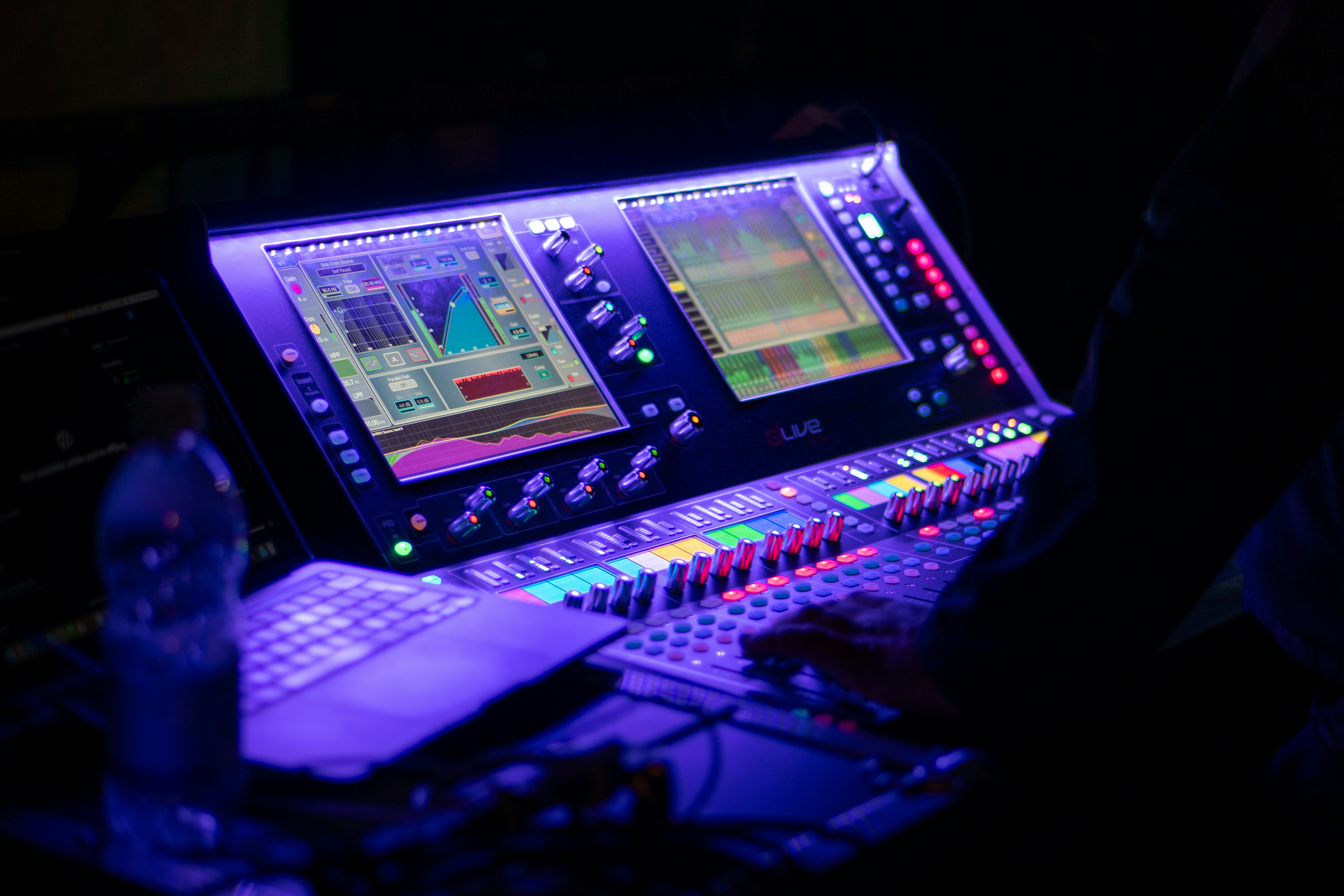
At the forefront of this revolution is the tactile and visual experience of the console itself. I've found that modern control consoles, with their responsive multi-touch screens, physical encoders, and dedicated buttons, make complex lighting adjustments fluid and intuitive. The integration of multi-touch technology, similar to that in smartphones and tablets, allows users to interact with digital content in a more natural way. Gestures like pinching to zoom on a lighting plot or swiping through a list of fixtures are now standard, significantly speeding up navigation. This technology enables multiple points of contact, allowing a user to manipulate several parameters at once, which fosters a more efficient and collaborative workflow. I can quickly adjust colors on a graphical wheel with one hand while using physical encoders with the other to fine-tune the intensity and position of moving lights with absolute precision. This combination of a fast, responsive touch interface and the tactile feedback of high-quality encoders and faders creates a powerful hybrid workflow.
This design philosophy also transforms the often spontaneous and improvisational world of live event lighting, a practice known as "busking" or "punting." Busking is the art of operating a console on the fly, reacting in real-time to a band, a DJ, or an unforeseen event on stage. Modern interfaces excel here, allowing operators to build a "punt page" with all their essential groups, colors, positions, and effects readily accessible. The ability to grab, combine, and modify these elements instantly is what makes a busked show feel alive and dynamic. A feature that I find to be a personal favorite is the concept of 'three-step programming.' This streamlined process—often 'what, how, where'—allows me to select my lights, define their appearance and actions, and record the result in seconds. This approach strips away layers of complex syntax, truly putting creativity first and making it possible to create stunning lighting scenarios rapidly without extensive technical knowledge.
Accessible for Every User
I believe that great tools should be for everyone, and modern control consoles truly embody that principle. They are designed to be user-friendly, even for those of us just starting out in lighting design. This focus on accessibility is breaking down old barriers, welcoming a new generation of creatives into the fold. Manufacturers now offer a range of consoles specifically engineered for ease of use, making them a perfect fit for smaller venues, schools, houses of worship, and community theaters. For example, some product lines are designed to offer a gentle learning curve with intuitive interfaces that cater to beginners and pros alike. This approach ensures that even volunteers or students with minimal experience can program and run a visually engaging show without an intimidatingly steep learning curve.
A key aspect of this accessibility is the quality of the onboard user support. Clear on-screen guidance, often in multiple languages, helps clarify functions and overcome language barriers, which makes the learning curve much smoother for me. Many consoles now include integrated help systems, tooltips, and even video tutorials directly accessible from the screen. This means I don't have to stop my workflow to search for a manual or watch a video on another device; the answers are right there when I need them. Furthermore, thoughtful hardware design plays a huge role. For example, a dedicated 'Z button' that can be mapped to a frequently used tool or a 'help' function ensures I can quickly access important functions without navigating through complex menus. This combination of software assistance and smart physical layout builds confidence and allows new users to experiment and learn without fear of getting lost in the system. The industry's investment in free training resources, such as online courses and tutorials, further democratizes this knowledge, ensuring anyone with a passion for light can get started.
Boosting Creativity with Advanced Control Consoles Features
While simplified workflows are essential, the true joy of lighting design comes from pure creative freedom. This is where advanced control consoles truly shine, offering a sophisticated palette of tools that empower designers to paint with light in ways that were once incredibly complex or even impossible. These features move beyond simple commands and unlock a world of dynamic, expressive, and deeply nuanced lighting.
Unleashing Dynamic Color and Movement
When it comes to pure creative freedom, these control consoles are a game-changer. I can effortlessly adjust colors and control light movement, opening up a world of spectacular dynamic possibilities for any production. Today’s consoles have powerful built-in effects engines that can generate complex movements and color transitions without needing to program every single step manually. Instead of plotting dozens of cues to make a light move in a circle, I can now simply apply a "circle effect," adjust its size, speed, and direction, and let the console handle the complex mathematics. These engines offer a vast library of customizable options, from smooth sine waves for gentle fades to chaotic, random strobes for high-energy moments.
The creative potential expands exponentially with features that integrate visual media into the workflow. The 'Image picker' is a feature I find incredibly inspiring, as it allows me to upload a photo—a sunset, a painting, a piece of fabric—and select colors directly from the image for precise, harmonious matching. This ensures that the lighting perfectly complements the set design, costumes, or a desired mood. A photo often contains a naturally balanced color scheme, and tools that extract this information provide a palette that feels inherently cohesive and authentic. To take this even further, I can use 'Mood Boards by LEE Filters' to find ideal color palettes with ease. LEE Filters offers curated collections of gels and colors that are staples in the industry, and having digital access to these libraries within the console allows me to experiment with proven, professional color combinations instantly. This fusion of intuitive color selection and powerful effects generation is what allows designers to build rich, layered, and emotionally resonant visual worlds.

Versatile Applications for Any Setting
I’m always impressed by the adaptability of these control consoles, as their scalability allows them to fit perfectly into almost any environment. Whether I’m working on a high-stakes professional theater production, a heartfelt worship service, a fast-paced broadcast studio, or a creative school play, the core principles of control remain the same, but the demands change dramatically. Modern consoles address this with scalable hardware and software. A flagship console might be at home on a Broadway show, while a more compact model from the same family, running the exact same software, can offer a familiar workflow for a smaller community theater or a church. This ecosystem approach is invaluable for freelancers and volunteers who may work in different venues, as it reduces the learning curve and builds confidence.
Specifically for houses of worship, for example, a console needs to be volunteer-friendly yet powerful enough to handle both pre-programmed cues for a service and spontaneous, on-the-fly operation for a worship band. In a broadcast studio, the requirements are different again; here, consistency, reliability, and precision are paramount. Lighting for a camera has strict technical requirements for color temperature and flicker-free performance, and broadcast-grade consoles are designed to provide that stable, repeatable control. The ability for a single product line to cater to these diverse needs speaks to the immense flexibility engineered into them.
Furthermore, the physical design of these consoles has evolved to meet the demands of modern productions. Their compact size and simple setup also make them ideal for portable applications, letting me take my creative tools wherever my projects lead me, without any complicated installations. Many powerful consoles now come in lightweight, wing-sized formats or even as software that can be run on a laptop with a portable control surface. This mobility is essential for touring productions, corporate events, and freelance designers who need a consistent and powerful setup regardless of the venue. The rise of robust wireless technologies and network-based protocols means that setting up a complex rig is no longer a web of cables, but a streamlined process of connecting to a network. This makes it feasible to bring a high level of production quality to temporary venues and on-location shoots, empowering creativity everywhere.
The Efficiency and Reliable Control Consoles Deliver
In any creative endeavor, time is one of the most valuable resources. From my perspective, efficiency is paramount, and modern lighting control consoles are meticulously engineered to save time at every stage of a production. The less time spent on tedious technical tasks, the more time is available for artistic refinement and programming. This focus on a streamlined, efficient workflow begins with the physical hardware and extends deep into the software's architecture, demonstrating a commitment to reliability and speed.
Streamlined Setup and Management
The days of laborious, manual setup are quickly fading, thanks to incredible advancements in console technology. Modern lighting control consoles are engineered to save valuable time, and their compact, often lightweight design and straightforward setup process allow me to begin designing almost instantly. Unpacking and connecting the console is quick, but the real time-saving magic happens in the software. The initial and most crucial step, 'patching,' which involves telling the console what fixtures are connected and where they are in the DMX network, has been revolutionized.
The 'RigSync technology' is particularly impressive for me in this regard. This award-winning feature simplifies commissioning and ongoing management through automatic discovery, patching, and monitoring. When I connect an RDM-enabled lighting rig to a compatible console, RigSync can automatically detect the fixtures, assign them unique DMX addresses to avoid conflicts, and patch them into the console. It continually monitors the system, so if a fixture's address is accidentally changed, the console can either flag the error or automatically correct it, ensuring my show file remains accurate. This leads to significantly less technical hassle and a much smoother creative process, turning what was once hours of manual data entry and troubleshooting into a task that takes mere moments. This automation is a monumental leap forward, particularly in venues that don't have a dedicated full-time technician.
Robust Connectivity for Comprehensive Control
For me, reliability and comprehensive control are non-negotiable, and modern control consoles excel in delivering both. The ability to manage a vast and complex lighting rig with unshakable stability is the foundation of any successful production. These consoles achieve this by offering a multitude of connectivity options, including the steadfast reliability of physical DMX ports and incredibly strong support for Ethernet-based protocols. The traditional 5-pin DMX cable remains a workhorse for its simplicity and durability. However, as shows grow in scale and complexity, network-based protocols become essential.
This is where protocols like Art-Net and sACN (Streaming ACN) come into play. These protocols allow lighting data to be transmitted over standard computer networks, which offers immense scalability. Instead of running dozens of individual DMX cables from the console, I can run a single Ethernet cable to a network switch and then distribute the signal to various nodes around the stage. sACN, being a more modern and efficient standard, is particularly adept at managing network traffic, reducing congestion, and ensuring data arrives reliably, which is crucial for systems with high universe counts. This hybrid approach, combining physical DMX for smaller or more isolated elements and networked protocols for the larger system, provides the ultimate in flexibility and reliability.
This extensive connectivity is what lets me manage a vast array of lighting fixtures across many DMX universes—sometimes up to 64 or even more. A single DMX universe contains 512 control channels. While that may sound like a lot, an advanced moving light can easily use 30, 40, or more channels for its various functions (pan, tilt, color, gobos, zoom, focus, etc.). A rig with just a few dozen of these sophisticated fixtures can quickly exceed the capacity of a single universe. Large-scale concerts and productions often require tens of thousands of channels. By supporting dozens of universes, a single console gives me the power to precisely control thousands of individual parameters. This capacity is what brings my most ambitious lighting designs to life, allowing me to craft intricate, layered, and perfectly synchronized visual experiences on a massive scale.
Frequently Asked Questions (FAQ)
What is the difference between a PC-based controller and a dedicated lighting console? A PC-based controller uses software on a standard computer (laptop or desktop) paired with a USB-to-DMX interface to control lights. It's often a budget-friendly and flexible option for smaller setups. A dedicated lighting console is an all-in-one hardware unit with an integrated processor, screen(s), physical faders, and buttons. Consoles are built for the singular purpose of lighting control, offering greater stability, tactile feedback, and processing power for more demanding live shows and complex rigs.
What is a "DMX universe" and how many do I need? A DMX universe is a single network of up to 512 control channels. Each function on a light (like intensity, pan, or a specific color) uses at least one channel. Simple lights might use only a few channels, while complex moving lights can use 30 or more. To determine how many universes you need, you add up the total channel count of all the fixtures in your rig and divide by 512. For example, if your total channel count is 800, you will need two DMX universes.
Is DMX still relevant with the rise of network protocols like Art-Net and sACN? Absolutely. DMX512 remains the fundamental protocol for how lighting fixtures receive their instructions. Art-Net and sACN are protocols used to transport DMX data over long distances using standard Ethernet networks. So, you use Art-Net or sACN to send data from the console to a network node, and that node then converts the signal back into a standard DMX signal that the lights can understand. They work together, rather than competing.
What should I look for when buying my first lighting console? For your first console, prioritize ease of use, the number of fixtures you need to control (both now and in the near future), and the types of events you'll be doing. Look for a console with an intuitive interface, good onboard help resources, and a clear workflow. Consider consoles from manufacturers that offer a scalable family of products, so as your needs grow, you can move to a larger console without having to learn a completely new system.
Conclusion
In my experience, the right control console is far more than just a piece of equipment; it's a true partner in the creative process. It acts as the crucial bridge between an artistic idea and its physical manifestation in light, simplifying complex technical tasks and dramatically expanding one's artistic horizons. The power to intuitively manipulate color, movement, and intensity frees the mind to focus on storytelling and creating atmosphere, rather than getting bogged down in cumbersome programming.
I genuinely believe that by embracing these intuitive and powerful tools, we can all unlock new levels of expressiveness in lighting design and truly make our creative visions shine. Whether you are illuminating a stage for a play, a concert, or a worship service, the console is the instrument that allows you to play the light. The journey from a blank stage to a breathtaking visual spectacle is made not only possible but enjoyable by this incredible technology.
So, I encourage you to explore these remarkable control consoles. Discover their features, experiment with their workflows, and see how they can empower you to craft unforgettable illuminated experiences. Let's start shaping our world with light, one stunning and effortlessly programmed cue at a time.